
The circularity project: mapping the transition to a sustainable future
 Tools
Tools Tools
Tools


Shilpi, Hitesh, Deore, Shlok and Deshmukh, Vedant (2024) The circularity project: mapping the transition to a sustainable future. In: Proceedings of Relating Systems Thinking and Design, RSD12, 06-20 Oct 2023, Washington, D.C., USA.
![[thumbnail of Shilpi_Circularity_Gigamap_2024.png]](https://openresearch.ocadu.ca/id/eprint/5171/1/Shilpi_Circularity_Gigamap_2024.png "Shilpi_Circularity_Gigamap_2024.png") 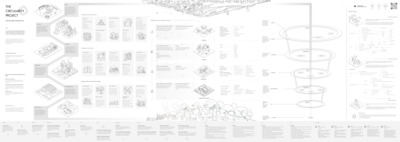 Preview |
Image
Shilpi_Circularity_Gigamap_2024.png Available under License Creative Commons Attribution Non-commercial No Derivatives. Download (6MB) | Preview |
Preview |
Text
Shilpi_Circularity_Paper_2024.pdf Available under License Creative Commons Attribution Non-commercial No Derivatives. Download (126kB) | Preview |
Abstract
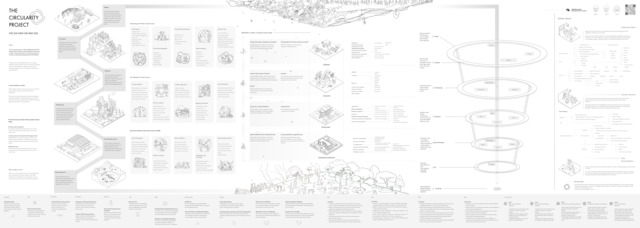
The Circularity Project includes a comprehensive systems map that explores the transition from a linear economy to a circular economy, focusing on the roles and interactions of various stakeholders. Our team of three researchers diligently analysed and visualised the complex web of relationships within the context of circular economy principles. The systems map provides a holistic view of the current linear economy model, highlighting its shortcomings regarding resource depletion, waste generation, and environmental degradation. It depicts how the linear economy funnel leads to vast amounts of waste ending up in landfills, perpetuating a cycle of inefficiency and ecological harm. Our map illustrates the engagement of diverse stakeholders, including governments, businesses, institutions, and consumers. By identifying their interconnected roles, the map showcases the potential for collaborative efforts in driving the transition to a circular economy.
Our research involves data collection, literature reviews, and engaging workshops with stakeholders from different sectors. Through site visits and interviews, we gained insights into real-world practices and challenges related to circular economy adoption. Therefore, the map presents a narrative for transition, with innovative solutions and proposals for the next ten years. It highlights the importance of education as a key driver in fostering circularity awareness and knowledge among students, empowering them to become active participants in the transition. Furthermore, policy recommendations are outlined to facilitate the necessary regulatory frameworks and incentives for circular economy practices.
Additionally, the map emphasises the significance of circularity recognition, showcasing the potential for creating certification systems, labelling schemes, and incentives that encourage businesses and consumers to embrace circular practices. Overall, our systems map offers a visual representation of the journey towards a circular economy and serves as a valuable tool for policymakers, businesses, educators, and researchers. It provides a foundation for informed decision-making, guiding efforts to create a more sustainable and regenerative future.
| Item Type: | Conference/Workshop Item (Paper) |
|---|---|
| Uncontrolled Keywords: | sustainable development, resource efficiency, waste reduction, environmental sustainability, regenerative design, life cycle assessment, supply chain sustainability, recycling and reuse, zero waste |
| Divisions: | Faculty of Design |
| Date Deposited: | 30 Jun 2026 15:12 |
| Last Modified: | 30 Jun 2026 15:15 |
| URI: | https://openresearch.ocadu.ca/id/eprint/5171 |
Actions (login required)
 |
Edit View |